Storage Under the Stairs Without the Deep Pile
Use the height changes beneath a staircase to give a few kinds of belongings an accessible home.
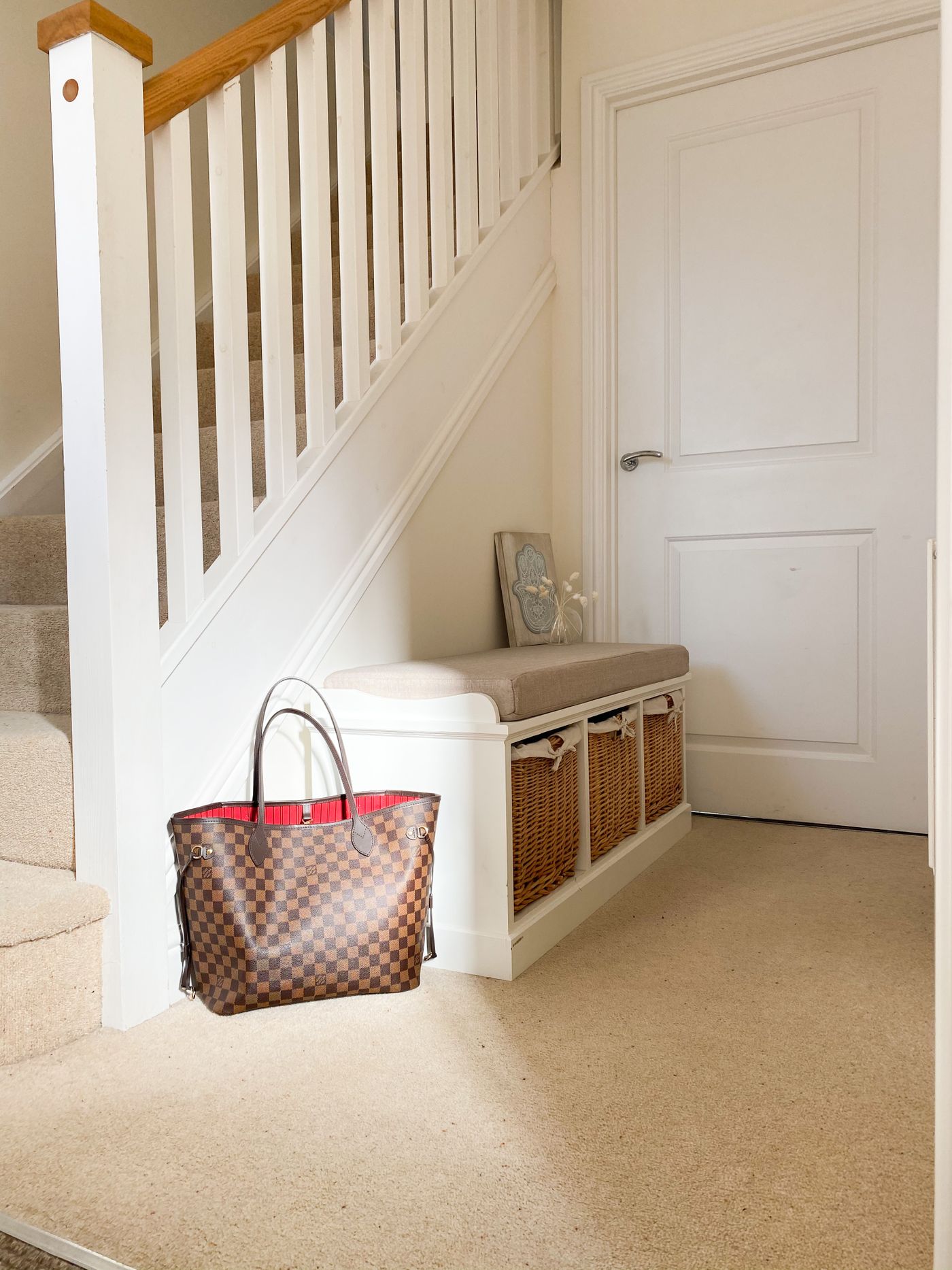
It is easy to put something under the stairs and surprisingly hard to get it out again. The first box goes in neatly. The next fits across the entrance. Before long, reaching a spare blanket means kneeling on the floor and pulling out equipment for three unrelated jobs. A storage bench and a basket can serve a shallow open alcove better than elaborate cabinets. An existing cupboard under a long flight might need more thought, especially where the opening is much smaller than the space behind it. In either case, start with the path an object will take from the rest of the house into the space and back again. That path limits what the space can hold conveniently.
Measure the way in before measuring the inside
Sketch the outline of the available space. Mark the width and height of the opening, the tallest part, and the points where the ceiling becomes too low for a box to stand upright. An opening can seem generous because its high side lets you see a lot of space. A large object can still be difficult to turn once it has passed through the door. Use a cardboard box similar in size to anything you want to store. Bring it in at the angle you would normally use, place it where it needs to go and take it out again. Try the return trip with the other proposed containers in place. The test box will tell you more about turning space than a measurement of the far wall.
Check what already needs access. Look for meters, controls, valves, electrical equipment or other services. They need to stay accessible and may require working clearances. Keep the staircase, landings and escape routes clear. If the proposed area is subject to fire safety or building rules, find out what storage and alterations are allowed before adding fixtures or enclosures. This matters especially in shared buildings and where storage would affect access below or alongside stairs. Avoid changes to stair framing or existing protective finishes without appropriate professional advice. Freestanding storage that sits safely within the usable area can be a sensible first trial while you find out what the space can do.
Note the conditions under the stairs. A dusty dry alcove is different from a cupboard with a cold exterior wall or a smell of damp. Look behind the existing pile, rather than assuming that anything indoors will remain dry. Address leaks, damp or mould before filling the space. Make sure containers don't obscure ventilation openings and leave enough room to inspect surfaces that need attention. Where a cupboard has a light, check whether you can see the floor and read labels from the entrance. A bright fitting blocked by the first tall box does very little for the containers behind it.
Give the high end the things that need height
The full height at one end is often the easiest part to reach. Use it for an awkward item that needs to stand upright or can be lifted out in one motion. That could be a compact vacuum if the model can be stored safely there, a folded step stool, or a tall household container. Check the actual handle position and whether the item can turn without hitting the ceiling. If it has an attachment or cord, give that piece a place beside it so it can't catch the door. Keep equipment used often close to the opening. Plan its return from the place where it is usually used, including any turn around a door or piece of furniture.
Separate the things that don't need the same height. A long narrow cardboard box can occupy a lot of the tall end even when lying flat. Try it across the low stretch where it can slide directly toward you. A basket of soft items can work below a low bench if the basket has a front grip and enough room for fingers. Take care with pull out pieces that can fall or tip when extended. Follow instructions for any fitted hardware. If a box has to be lifted above another box before it clears the opening, keep the lower one light enough to move or change the arrangement. The upper end of a sloping space is especially valuable when you can leave a little of it empty for turning things.
Use the most remote section for a short list of things you need only occasionally. It might be suitable for a light seasonal decoration in a lidded container, or a spare cushion that can be drawn out without snagging. A heavy box that must be dragged with your arms fully extended is a poor candidate. Mark the visible face rather than the lid, and position the grip so it can be reached from the front. If the back remains inaccessible even with a long container, leave it free. Storage capacity that makes everyday things harder to retrieve rarely improves a cupboard.
Try a shallow bench where people already pause
An open space under the stair may be beside a living area where people sit to take off shoes, read, or wait for somebody. A low bench can give that moment a place without filling the whole outline of the stair. Before buying one, measure the head clearance when someone sits down and stands up, including the place where their body moves forward. A seat that fits underneath the slope can still put the person's head too close to it on the way up. Check the view from the side and the route past the knees of a seated person. Choose a stable bench designed for sitting, with suitable load capacity and fixings as required. An ordinary storage box should be used as a seat only if it is designed for that purpose.
If there is room for a basket under the bench, give it a job you can describe in a few words. Throw blankets near a sitting area make sense. A basket of unrelated objects that have no better home quickly becomes a second pile. Test the basket when it is full. Check that fabric or handles can't catch the underside and that it can come out without shifting the bench. Leave enough floor clearance to see dirt and enough access to clean. If children use the area, choose items and containers appropriate to them. Avoid lids, hinges or unsecured furniture that present hazards, and keep unsuitable tools or products elsewhere.
An open bench may be visible from another room. Consider what gets seen on an ordinary day. A single sturdy basket leaves a little space either side and can look settled even when it is half full. A line of six identical containers will make you remember which one belongs where unless their contents are obvious. If you need the full length for storage, a fitted design may be useful after you have tested the categories. Until then, a modest seat and one container can tell you whether the space is more valuable as somewhere to pause or as somewhere to store things.
Decide what stays out of the alcove
Match each proposed item to the conditions and the access it needs. Things sensitive to damp, heat or pests belong in suitable storage. Products with specific safety or ventilation requirements should stay where their labels and applicable rules allow them. Keep flammable, hazardous or restricted materials out of an unsuitable under stair space, especially near circulation and exits. Give daily belongings somewhere they can be taken out easily. If a spare tool is needed to reach equipment quickly, it must be stored somewhere you can actually get to. Separate this decision from the wish to empty another cupboard. The under stair space has its own limitations even if it is the last empty place in the house.
Imagine what happens when an item comes back dirty or wet. A basket of clean linens should not share a container with damp outdoor gear. If the alcove is beside a door, offer suitable space for wet items to dry before enclosed storage. Check whether the need is occasional enough for a removable tray or whether wet equipment has a better home elsewhere. Move frequently used objects forward and inspect the floor after a week of ordinary use. If you find a row of belongings accumulating outside the door, look at what they are and why people stopped there. The storage may lack a place for those items, or it may simply take too many moves to put them away.
Use one retrieval as the final test
Choose three items. Take the everyday item out quickly and put it back without rearranging the rest. Pull out the broadest container and check for scrapes or places you lose your grip. Find the least used thing without relying on memory of the day you packed it. If one of the trials fails, change that part of the arrangement. It might be enough to turn a box so its handle faces the right direction or move a tall object out of the line of sight. A narrow opening that serves one single row may stay useful much longer than a space packed in layers.
When the arrangement has been in use for a month, look at the low end again. There may be spare room there even with everything back in place. Keep that room if it gives you access to the things further in. The space under a flight of stairs will never have the same shape as a standard cabinet. It can still become the most reliable place in the house for a few awkward objects, a place to sit down briefly, or both. You will know which role is working when you can reach what you came for and leave without rebuilding a stack.