A Narrow Hallway That Feels Easy to Walk Through
Use light, door positions and a few modest finishes to make a long, narrow hall feel like part of the home.
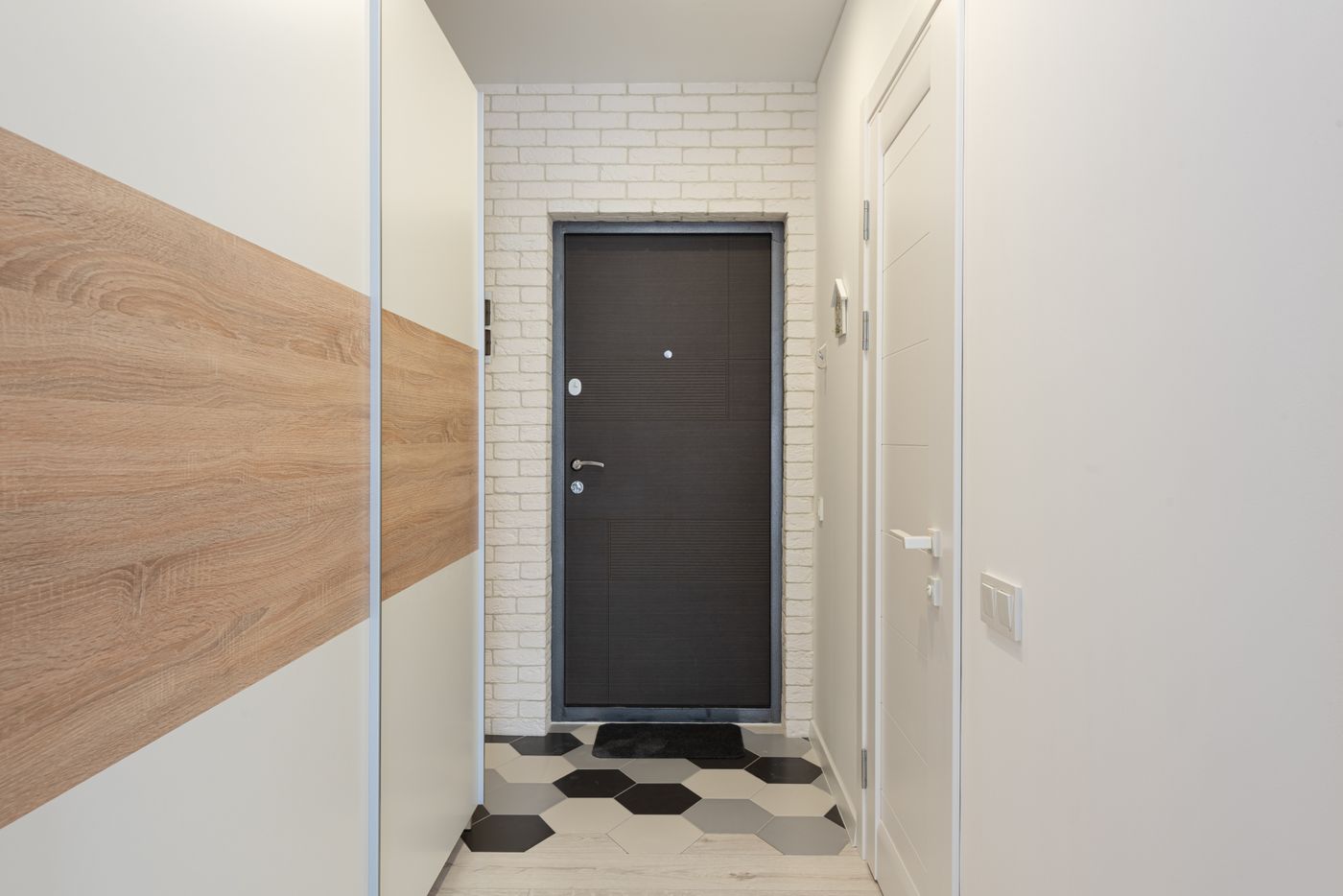
A narrow hallway is usually the only room you see in motion. By the time you notice its wall color, you may already be at the far end. What stays with you is the sequence: a bright doorway, a patch of shadow, the edge of a picture frame, a stretch of floor that seems to keep going. That is why painting every surface white can leave a hallway feeling as awkward as before. It changes a color without changing the experience of walking through.
The useful question is where you hesitate. Perhaps you look down because a room door opens across the path. Perhaps a lamp shines straight into your eyes from one end. A hallway can be improved a little at a time, and changes made at the point of hesitation generally do the most good.
Make a drawing with the doors open
Sketch the hall as a long rectangle and mark the doors, switches and changes in floor level. Draw the sweep of each door as it actually opens, including any handle that protrudes beyond the edge. A hallway may be wider than it feels because a large part of its floor seems reserved for doors. Seeing the separate arcs on paper makes it easier to decide where to keep things and where to leave space.
Walk the hall while carrying a laundry basket or suitcase. Do it at the hour when the hall is usually busiest. In homes where bedrooms and a bathroom open onto the same strip of floor, people may need to stand somewhere while a door opens. Try to find a clear patch where that can happen without somebody backing into a corner. Keep that patch open. Moving a hamper or a floor vase can have more impact than replacing a light fixture.
Look at the walls at elbow height. If you want to hang pictures, choose frames that sit close to the wall and use suitable fixings. A frame that looks shallow when you stand facing it may feel more intrusive when the edge comes toward you down the hall. Hold a folded piece of cardboard against the wall at the intended depth while somebody walks past. A convenient location for art is often a short section with no nearby swing or handle.
A door that must stay shut should have space to operate freely. Keep required exits and any fire doors unobstructed. If an open door helps you see better while you test the layout, work out how to get adequate light with it closed as well. The hall will sometimes need to work independently of the rooms around it.
Work with the light at both ends
Stand near one end during the day and look toward the other. Note which patches of wall are brightest, then turn around and repeat the observation. Many halls borrow most of their daylight from one room. A white wall at the dark end can remain dark because very little light reaches it. A small, well placed light can have a more noticeable effect there than a paler finish.
At night, check whether any fixture sits directly in your line of sight. A bare bright bulb can make the floor nearby feel darker by comparison. A fitting that spreads light across the wall or ceiling can help even out the transition. Start by comparing existing fixtures with their shades correctly fitted and with suitable bulbs. If a shade is unusually dark or directs all the light down in one circle, the problem may be the distribution rather than the total brightness.
Think about switching from both directions. A hall that is bright once you reach the middle may still be difficult to enter from a dark bedroom. In a rental or a home where you cannot change wiring, try an appropriate low-level light positioned to reveal the threshold. It should avoid shining into the bedroom or creating a tripping hazard. For changes to fixed electrical fittings or controls, use a qualified installer. You can still work out where the light should fall before discussing the installation.
Use a simple experiment to decide where to aim a new light. Have somebody hold a portable lamp in a safe position against one wall, then look from each end. Light on a short end wall draws the eye toward it. Light on a side wall makes a dim stretch easier to read as you pass. You might want one effect during the day and the other at night. If the end wall already has a bright doorway, the dim middle usually deserves more attention.
Test color where the hall is darkest
Paint samples that look identical in a shop can look quite different in a hall. Put test cards on the side wall and on the end wall. Look at both in daylight and after dark. A slightly warm neutral can look gray next to amber light, while a cool color can turn blue beside a warm timber floor. Compare each sample against whatever will stay in the hall, including the floor, doors and skirting.
Choose which parts should be easy to distinguish. Painting door trim the same color as the wall can make a run of closed doors feel quieter, especially if the handles and outlines are already clear. A contrasting trim can help when you want the doors to register quickly. The two approaches work differently when the hall has five doors on one side and a blank wall on the other. Put a sample at the edge of an actual doorway before deciding how much contrast you want.
A stronger color at the end of a long hall can help its length feel more deliberate. Test it when the door at that end is open and when it is closed. A pale side wall and a colored end wall can be enough. Repeating the accent at every doorway may produce a set of stripes as you walk. If you like the color, use it somewhere it can be seen as a surface rather than a succession of slivers.
Finish is as practical as color. A wall that takes frequent bumps from bags and laundry baskets needs a finish you can clean according to the paint maker's instructions. A higher sheen may highlight dents under a side light. View samples at an angle from down the hall, where texture and shine are easiest to notice. Keep the paint name, finish and a little spare material for future touch-ups if its storage instructions allow.
Give the floor an uninterrupted route
A runner can soften footsteps and make a hall feel less empty, but it changes how doors clear the floor. Measure beneath each door where the runner might sit, allowing for its backing as well as the visible pile. Lay the runner flat and use a suitable slip-resistant backing for that surface. If it curls at the ends or migrates after a few days, remove it until you can solve the problem. A narrow hall is the wrong place for something you learn to step over.
Look at floor patterns from the distance you will first see them. A pattern with a strong lengthwise stripe may emphasize how far the hall runs. A small repeat can make the floor read as a continuous surface. A large contrasting motif can sit beautifully in the middle of a wide entry and feel busy in a narrow corridor. If you are choosing a new runner, compare its overall shape as well as the sample. Short pieces with gaps may leave extra edges to catch and clean.
Consider the floor at the ends. Stopping the runner before a door often makes it easier to clear a threshold and prevents its edge from being dragged into the next room. Leave enough bare floor to open the door without scraping. If the existing floor already feels settled and footsteps are fine, you may prefer to leave it visible. A clear run of flooring is especially useful when the ceiling, doors and walls have many separate details.
Put one point of interest where it earns its place
A narrow hall can support a piece of art, a mirror or a small colored surface. Start with one thing you want to notice. Stand at the entrance to the hall and choose a spot visible at a comfortable distance. Try holding the object there, with help for anything heavy. A picture hung where you approach it straight on can be easier to enjoy than several frames that pass close to your shoulder.
A mirror can bring an image of another room into the hall. Check what it reflects from both directions. It might show a bright window or simply repeat the row of doors you already have. Keep it securely mounted with hardware suited to the mirror and the wall, away from door swings. A small mirror can be plenty if it shows the part of the room you hoped to see. A larger one puts more weight and glass into the busiest strip of the home.
Take an evening walk along the hall when you think you are finished. Notice whether you can see the changes in floor level, find the switches and reach each room without looking down at an obstacle. If you pass the art without noticing it, try it at the other end before adding anything else. The most successful changes may be nearly invisible from a photograph. You will feel them when you bring a basket through and no longer have to shift it to the other hip.