Having Four People Over When You Own Two Chairs
Make a small apartment welcoming for a few guests by planning the places to sit, where things can land and how the evening will move.
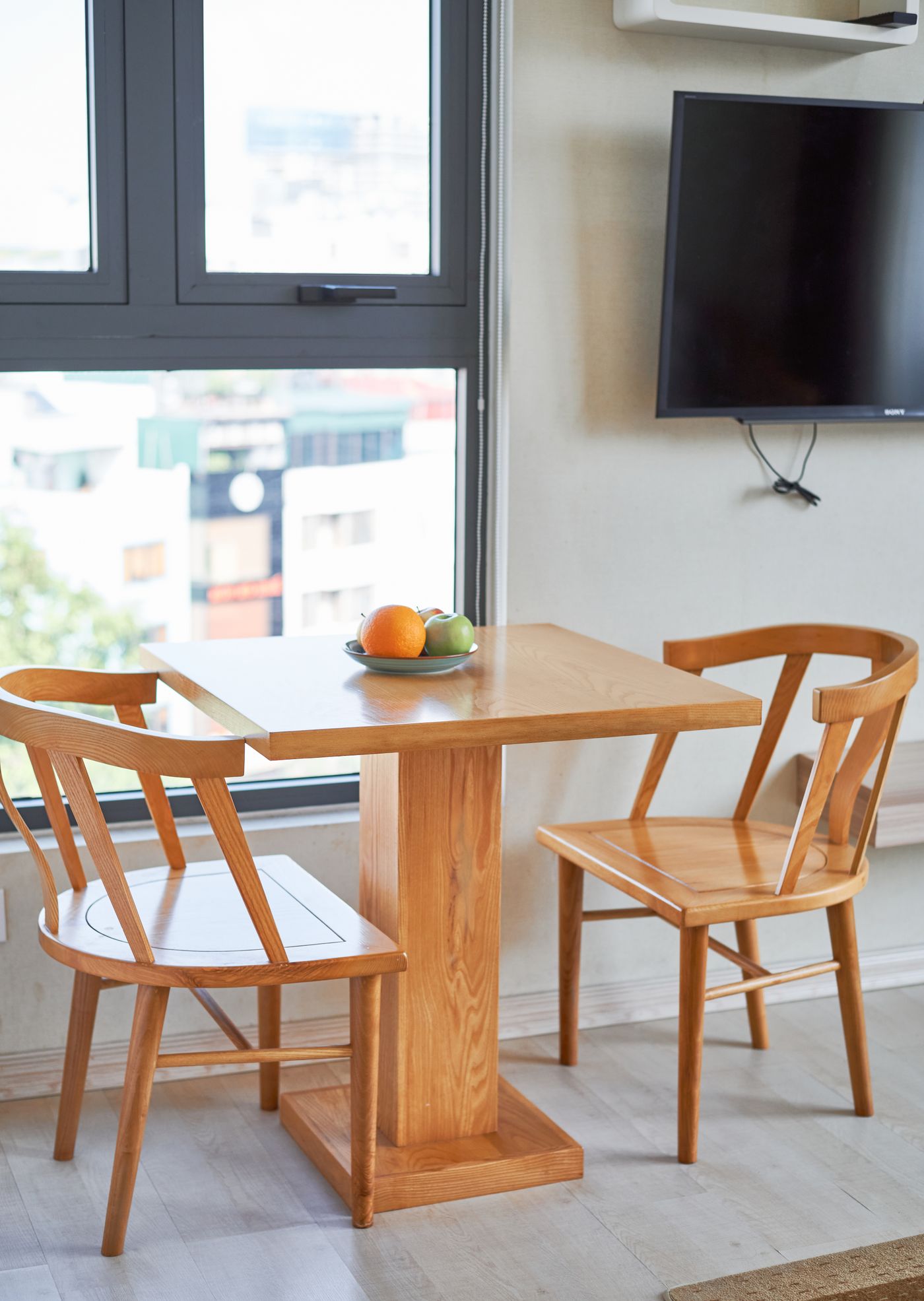
A small apartment can seem large enough for company until you count the chairs. The temptation is to solve that problem by buying two more and finding a corner for them later. A more useful first step is to picture the visit itself. Will everybody stay at a table for dinner, or will you share a few dishes and move over to the couch? Will someone need a chair with a firm seat and arms? Does a guest want a place to sit as soon as they arrive? Once you can answer those questions, you can decide which seats actually have to be in the room at the same time.
A short visit asks for a handful of conveniences. People need somewhere to put a bag, a way to get a drink and enough room to take their turn getting up. The apartment does not need to hold an extra dining room between visits. It just needs a workable arrangement for the evening you have in mind.
Begin with the kind of visit you can enjoy
Imagine a group of four adults, including you. One option is dinner served at a table. That asks for four places to sit through most of the visit, with enough table for plates and glasses. Another is a few things to eat served on a kitchen surface, then conversation around a sofa and two chairs. A third is coffee after a walk, with a short stay and a small table between people. All three are good ways to see friends. They need different amounts of furniture.
For a sit-down meal, consider serving the plates in the kitchen and putting just water and condiments on the dining table. Four people can often sit at a table that cannot support four settings plus a large serving dish. If a regular chair needs to come from the desk, try it before the evening. Make sure it sits firmly at the table and lets a guest rise comfortably. A folding chair borrowed for the night can be useful if it is suitable and stable. The aim is for everybody to have a seat they can use without having to perform an awkward balancing act.
If guests will eat from laps, plan food and dishes accordingly. A shallow bowl that can be held easily is easier than a large plate that needs cutting. Put each drink within reach of a stable surface so a person can set it down before taking a bite. Keep soup, very hot dishes and things that spill easily at the table. Ask people to help themselves in small groups if the kitchen entrance is narrow. One person reaching across the only path to the seating area can hold up the whole room.
Choose your seating with the actual people in mind. A low couch may be pleasant for one guest and hard to get up from for another. Keep a firm chair available and leave its route clear. Give anyone who uses a mobility aid space to approach and turn, and tell them about steps or a tight entrance in advance. These arrangements can matter far more to the success of the visit than whether all the chairs match.
Move the furniture that earns its move
Set up the room early enough to walk through it yourself. In many apartments, the extra chair fits when the coffee table goes sideways or moves to the wall. A side table can become a surface for glasses if it is stable and leaves a good path. Try moving the lightest piece first. There is little point shifting a sofa if turning the coffee table a quarter turn does enough.
Put an extra chair where you can join the conversation, away from the principal route to the door and bathroom. A conversation group works when people can see one another without twisting far to the side. It does not need to form a perfect circle. In a long room, two chairs on one side of a low table and a sofa at a right angle can feel comfortable. In a nearly square room, moving a chair back against the wall might open enough space for another without making conversation feel distant.
Check the lighting once the seats are occupied. A tall person can cast a shadow over a small table. A floor lamp that sits safely by the couch every day can become inconvenient once somebody needs to walk around the back of the couch. Keep cables clear of the route and make sure the lamp is stable. Aim for enough light to see a glass or read a food label. You can turn down the rest after dinner if everyone is comfortable.
Give the furniture somewhere to go when it is moved. A chair placed temporarily in a bedroom doorway still blocks the doorway. A spare object can be put against a wall in a room that remains easy to reach. If you cannot find a sensible temporary spot, look again at which piece you are trying to move. It may be easier to plan the evening around the existing furniture than to rearrange the apartment entirely.
Give arrival and departure a little room
People tend to stop just inside the front door. They take off coats, look for the host and try to remember where to put the bag they brought. In a small apartment, this can make a narrow entrance feel suddenly full. Decide where belongings go before anybody arrives. A clear end of the sofa or a suitable hook can take a coat. If you are using another room, choose a place that lets people retrieve their things without searching.
Make a clear spot for anything somebody brings to eat or drink. A guest holding a dish may need to hand it off before dealing with a coat. Set aside a patch of counter or table for it. If it needs to be refrigerated, check that there is a place in the fridge before the evening begins. A guest can stand with a dish for a while while you empty the fridge, but everyone will have an easier start if you already know where it goes.
Walk from the front door to the place where you expect to greet people. Make the same walk with two people coming from opposite directions. If there is a tight point, you may be able to keep the first arrivals further into the room while others come in. Keep a clear route to the exit for the whole visit. As people leave, look for a way to collect coats and bags without putting them on the floor where others are still walking.
Set up for drinks and dishes
A group will need to refill drinks and put down empty cups. Give those jobs separate places if you can. A jug and clean glasses can stay on a stable side surface, with space to put the jug down. Empty dishes can go straight to a specific counter spot or be collected after everyone has finished. A second station in a tiny room can be unnecessary. A clear corner of the same counter may do the job if you keep it away from food that is still being prepared.
Think about the path between the table and kitchen while carrying two empty plates. If it seems hard before the room is full, change the route or move a chair. A serving tray can reduce trips, but it needs somewhere level to land. It is often easier to bring two plates at a time and close any cabinet doors before serving. Leave the cleaning until there is a good moment to do it. Gathering a few glasses at once is fine when everybody has a place to put them until then.
If you are cooking, serve what fits your kitchen. A meal that can be set out from one pot and a salad bowl leaves more time to talk. You can prepare part of the meal before guests arrive, keeping food at safe temperatures and following any storage instructions. Ask about allergies or other dietary needs when you make the plan, and let guests know what ingredients you used. A short menu makes the details easier to communicate and leaves more places on the counter for a dish a visitor brings.
Leave one part of the room available
A narrow apartment still needs a place where someone can stand for a minute without displacing a chair. That might be the end of the kitchen counter or a small space by the window. Keep it available. Guests use these little gaps to step out of a conversation, look at something or make way for somebody carrying a dish. Filling every empty corner can make a room harder to share even when all the furniture serves a purpose.
Try to hear how conversation travels. A speaker too close to the seating may make people talk over it. If sound carries through a shared wall, move the seating away from that wall when practical and keep music modest. A small room rarely needs music at a high volume. Sometimes the pleasant thing about inviting four people into a compact space is that everybody can hear the same conversation.
After the visit, return the borrowed chair or move it back to its daily spot. Pay attention to what helped. If people reached the glasses easily but the dining chair by the door kept getting moved, put that chair somewhere else next time. If everyone was happiest around the sofa after dinner, try coffee and a plate of cake on the next visit. The rooms you live in can make enough space for people you like without being arranged around their arrival all week.