A Bathroom Vanity Shared Before Breakfast
Plan the mirror, drawer space, and clear counter around what two people need during the same busy few minutes.
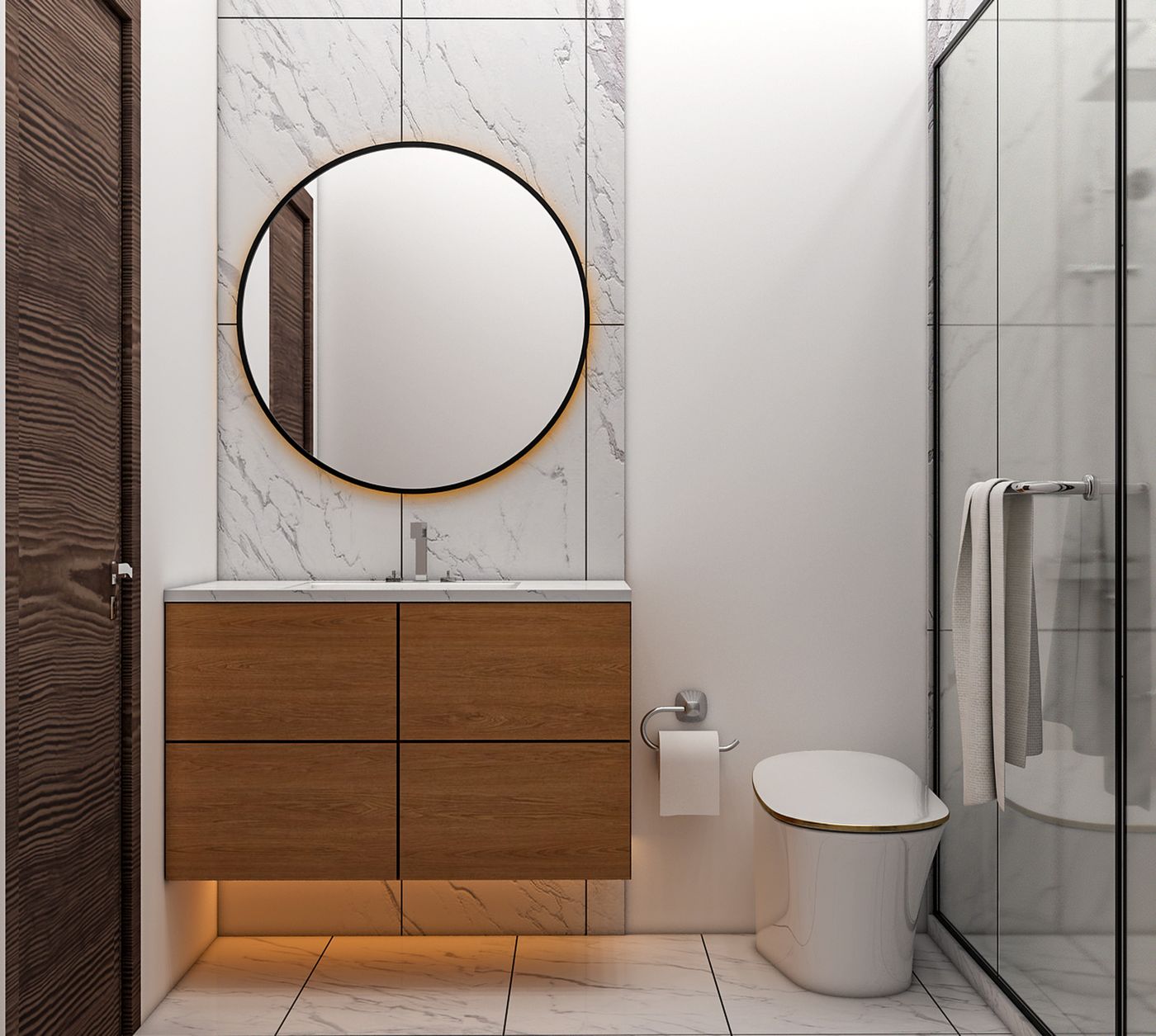
The evening is an easy time to judge a bathroom. The light is on, the counter has just been wiped, and the drawers are shut. Morning is less generous. Somebody wants the mirror while another person reaches for a toothbrush. A person opening the top drawer blocks the only place to stand. Both leave, and the person cleaning has to work around a surprising number of objects that could have lived elsewhere. The dimensions of the vanity did not change overnight. Its users simply asked it to do several things at once.
Before changing a shared bathroom, pay attention to the part of the day that goes least smoothly. For some people, the critical time is just after waking. Another household may need the room to function for several evening routines at different heights. Write down the tasks that cannot easily move elsewhere. Then think about the ones that can happen a few steps away, perhaps at a second mirror or at a clear surface just outside the bathroom. A plan can work better with the same vanity when the jobs closest to it become easier to distinguish.
Count the positions people need
Have two people walk through a busy morning together. One stands at the sink while the other takes out what they normally use. Does a closed drawer take up one person's standing room as soon as it opens? Can somebody step back from the mirror without asking the other person to move? If people already cooperate without thinking, observe where they make room for each other. One person may habitually stand by the edge of the sink, leaving the middle clear for a few seconds. That can be the basis of a useful plan.
A single sink with a stretch of clear counter can suit two people if their water use happens at different moments. The person preparing elsewhere needs a mirror, a stable place for objects, and access to their own supplies. Two sinks let two people wash at the same time, but they occupy more counter and affect space inside the cabinet. Measure your actual needs before choosing either arrangement. Ask a designer or plumber what fits the room and the existing services if the choice involves changes. Use the morning observation to describe which activity needs to happen where.
At the same time, pay attention to the routes behind both people. The bathroom door might open into the only place you can step while a drawer is in use. A laundry basket may take up floor space that can serve as a passing point. Try moving that basket and see what you gain. A shallow cabinet or drawers that open toward a quieter part of the floor may be more useful than additional counter depth in a narrow room. Account for the needs of anyone who uses a mobility aid or needs extra space to turn, and seek qualified advice for an accessible installation.
Let the mirror meet the people who use it
Stand at the spot where you normally see your face. If the sink is in the way when you lean toward the mirror, a more useful mirror position might be beside the sink. One wide mirror gives several people a view at once, although somebody close to the edge may have poor light. Two mirrors can give people separate positions and work well if the wall and layout provide enough room. They also leave an area in the middle where neither person can see. Use paper outlines on a suitable surface to try the dimensions with the actual users, including somebody shorter or taller than the person doing the measuring.
Try the light early in the morning, after dark, and when sun comes directly through the window. Look at where shadows fall on the face while you stand where you usually stand. A light centered above a mirror can look even on the wall and leave shadows at the eyes. Light arriving from more than one direction can soften them. If you are planning electrical changes, discuss the aim with a qualified electrician who can choose appropriate fixtures and positions for the bathroom. Explain where people stand, whether there is daylight, and which nearby surfaces reflect light.
A mirror also reflects the rest of the room. Stand at the entry and see whether it repeats a bright window, a dark corner, or a tall rack of towels. A reflected window can make the room feel brighter, but a direct reflection at eye height may be uncomfortable. Put a small mirror in the possible location if you can position it safely, and shift it gently to see what the larger mirror would show. Observe the view from the hall if the door often stays open. You can change a reflection by adjusting the position of something opposite the mirror as well as by changing the mirror.
Put everyday supplies within one movement
Empty just the part of the vanity that people use every day. Look at the items that come out each morning and find homes for them close to the places where they are used. Two small trays in a suitable drawer can give two people their own collections and make it possible to lift a set onto the counter temporarily. A shallow drawer suits small objects that disappear under taller bottles. A deeper compartment can suit bottles kept upright. Measure the height of the actual containers and the room available with the drawer shut before buying any dividers.
Common supplies can stay in a central location if the people who use them can reach without crossing each other's hands. An extra roll of paper or a box of tissues may make sense near the person who uses them. Larger spare bottles can go farther away. Group replacements in one place, then look there before bringing a new one into the bathroom. That keeps the best drawer from gradually becoming a stockroom. Follow storage instructions for medicines and cleaning products and keep hazardous items securely out of children's reach. Do not assume that every supply used in the bathroom needs to stay in it.
Keep some of the cabinet's space empty so the system can absorb a change. A temporary set of supplies for a visitor, a new bottle a little taller than the old one, or an object that needs to dry can all test a tightly packed drawer. A spare corner makes a good place to put something away without rearranging everything else. If you need to move two containers to find your toothbrush, spread the items out over a wider surface or move the least used things to a different cabinet.
Inspect the surfaces that get wet
Look at what happens around the sink when somebody washes their face or reaches for a towel. Watch where drops land and where they collect if nobody wipes the surface immediately. If the towel is far away, someone may have to drip across the main work area to reach it. Try a spot beside the sink where the towel can dry and stay out of the way of a drawer or door. Put it within comfortable reach of the people who use it. Give damp objects a suitable place to dry instead of closing them in a drawer that contains dry supplies.
Compare the proposed materials at the corners and joins you will clean. A wide countertop can be easy to wipe while the narrow gap behind a fitting remains hard to reach. Try reaching a similar space with your hand and a cloth before choosing fixtures. If you are considering a cabinet with a recessed base or a gap underneath, check whether the floor cleaner can reach it. Ask the supplier about the finish's maintenance guidance and use the cleaning products it recommends. An attractive surface is easier to live with when you can look after the entire piece.
Think about the meeting between doors and the wall or floor. The cabinet may sit beside a bath, where people sometimes step out wet, or face a shower door that changes where water lands when it opens. Tell your installer what you observe so that they can advise on suitable materials and spacing. A handle can be easy to hold when wet if its shape gives your fingers room. A front opened by gripping an edge can leave water in a different place. Try the proposed movement before deciding where each handle belongs.
Leave the room ready for the next person
Decide what a quick reset looks like. It might mean returning two trays to a drawer, hanging one towel, and wiping a short stretch of counter. If clearing the surface requires going to three shelves and fitting everything around spare products, it probably will not happen during the busiest part of the morning. Design the reset while the room is occupied and somebody is about to leave. A routine that takes a few seconds will remain useful after the excitement of a new bathroom wears off.
Use a small tray or a clear marked patch as a temporary trial if you are unsure how much counter space each person needs. The trial may reveal that one person wants a place for glasses beside the mirror and another needs room for an open toiletry bag. Both can fit if the items leave the counter when the routine ends. At the end of several mornings, look for the single recurring interruption and adjust that part first. A good shared vanity leaves the second person a place to begin as soon as the first person needs to move on.