A Garden Path That Makes Room for Rain
Observe where water goes before setting stones, and build a path that stays comfortable on a wet morning.
After a night of rain, a garden path reveals what its plan left out. At the foot of a step, a puddle covers the only place to stand. Gravel has washed into the bed where a corner turns downhill. Further along, a slab tips just enough to splash water up a trouser leg. These are useful clues, whether you're fixing a path or setting out a new one. Think of the route as a dry place to put your feet that also has to coexist with all the water arriving around it. The surface need not be elaborate. A clear route, a stable base and sensible places for runoff do more than a handsome set of stones chosen in isolation.
Go out when you would rather stay inside
Watch the site during rain from a safe spot or go out once the worst has passed. Mark where downspouts discharge, where water comes off paving, where bare soil collects silt, and where the lawn stays wet longest. A small line of twigs or grit can show the path water took. There might be a wide area that dampens evenly and a narrow strip where moving water carries soil with it. Those conditions call for different responses. A well built porous path can help rain that lands on its surface seep into suitable ground. It should not automatically become a drain for a roof or a channel for concentrated runoff from uphill.
Notice how long the water remains. A shallow puddle that disappears soon after a shower is different from a depression that stays muddy day after day. Look for a reason before changing the surface. Water might be caught on compacted soil at a gate, arriving from a broken downspout connection, or sitting where the ground simply has nowhere to drain. Keep runoff away from building foundations and avoid shifting water onto a neighbour's property. If water already threatens a structure, crosses a property line, or rushes down a steep slope, get local drainage advice before putting a new path in its way.
Walk the route with something in your hands
Lay out the likely line with a hose or rope and try it with the equipment that uses it. A wheelbarrow needs room at a curve, a mower needs a way to cross the edge, and people carrying a tray may want to see each step without looking down constantly. A side route to check a flower bed can use individual stones, but a frequently travelled route to a shed or door is easier with a continuous, even surface. If a user relies on a wheelchair, walker or cane, choose a firm surface, avoid abrupt changes in height and make the turning and passing spaces suit that person. Applicable accessibility requirements and local standards may specify additional dimensions.
Do the walk in both directions. A gate can look generous when open but leave no dry place to stand while pulling it toward you. A tight corner through a bed will end up wider if people regularly step off the path to pass someone else. A path often starts and ends at existing surfaces. The final connection matters more than the shape of the middle: you want a clear transition without a loose lip under a shoe or a catch point for a wheel. If a landing serves an exterior door or steps, its drainage and threshold clearance deserve a careful check; don't build up material that blocks intended drainage or raises the exterior grade against the house.
Compare surfaces by what makes them fail
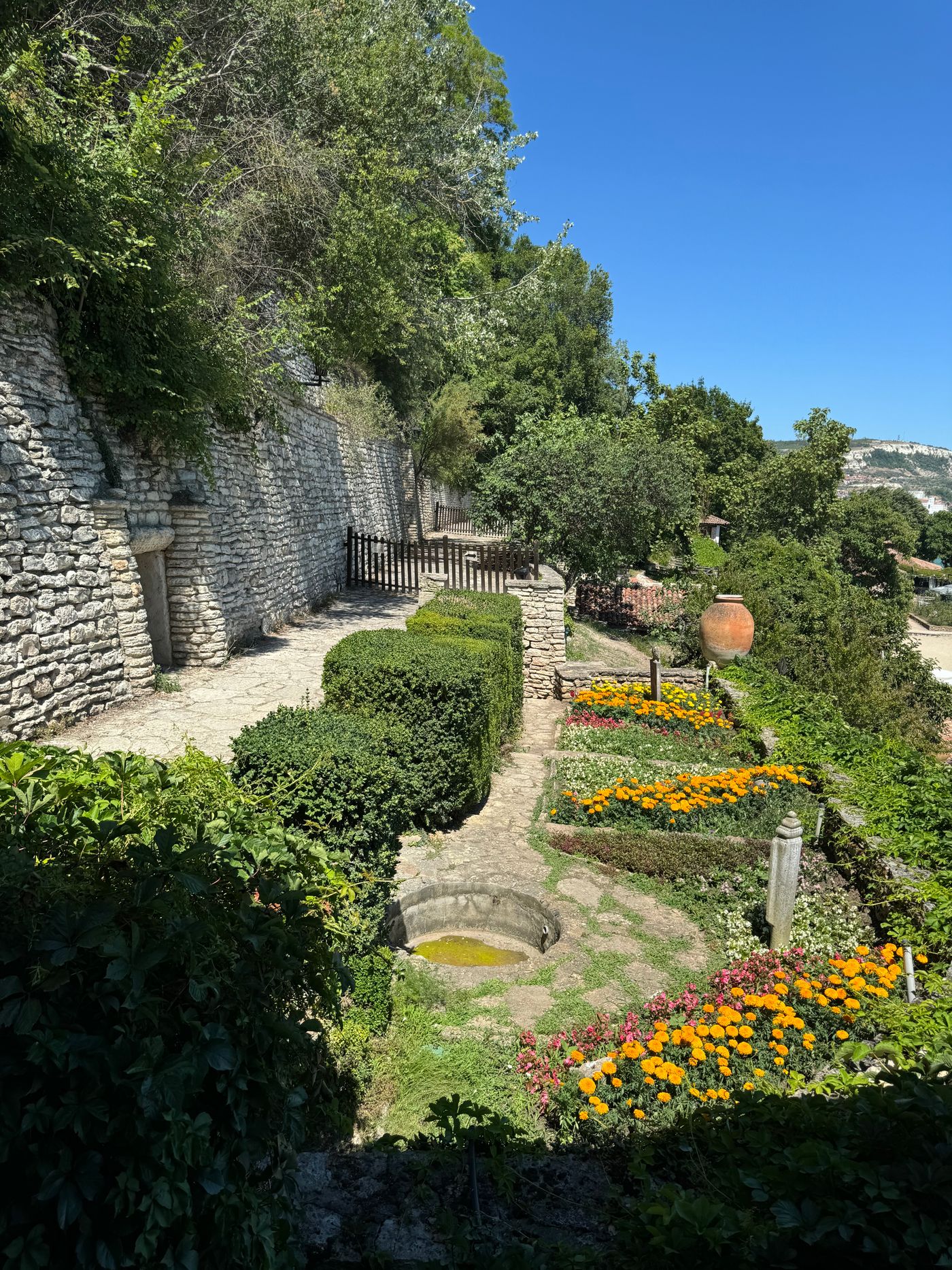
An aggregate path can suit an informal garden. A small angular aggregate can interlock better than loose round pebbles under a foot, although the whole assembly has to be suitable for the load, soil and rainfall. A thin loose topping can migrate into the adjoining beds or turn onto a patio like marbles. A deep loose topping is harder to push a wheel through. Look at a completed example in wet weather, if possible, and ask what size of material is used at the surface and underneath. Aggregate chosen to compact into a dense surface will not necessarily drain like an engineered open graded base. The word gravel alone tells you very little about how the finished path will behave.
Spaced slabs can interrupt a lawn attractively and suit occasional trips. Each slab needs full, stable support, with no wobble and no sharp step above the adjacent surface. The distance between slabs should suit the people using them; placing every stone at the stride of the tallest adult guarantees a series of hops for someone else. On a busy route, consider tightly laid pavers with a compatible joint system. True permeable paving relies on the bedding, base and outlet as well as its visible joints. Putting decorative gaps over a sealed or waterlogged base will not deliver the same result. Ask for a detail that matches the system you intend to build, and follow local requirements for excavation and drainage.
Bark chips work differently again. They can make a quiet walking surface in a planting area where occasional replenishment is welcome and very fine wheels are uncommon. Chips break down and can shift in strong runoff. The path next to a vegetable bed may benefit from material that can be topped up by hand, while the one under a low gate needs an edge that can be swept. Compare the recurring work as carefully as you compare prices. Filling a joint each spring is a small task on a short link and a much bigger one on a long passage bordered by leaf dropping trees.
Make one test section before committing
Before digging, arrange utility locating as required in your area and check for private lines such as garden lighting, water pipes and irrigation. Note major tree roots and avoid cutting them for the sake of a straighter line; shifting the path is often the cheaper repair. Mark the finished height on stakes or use a long straightedge to relate it to a nearby sound surface. That lets you see how the finished path will meet beds and thresholds before the materials arrive. Confirm where excavated soil and deliveries can sit without blocking drains or compacting ground around established trees.
Where the route is small and straightforward, build a short trial section using the intended surface and base detail. Include the edge. Keep some of the original garden on both sides so you can see the actual transition. Put weight on a corner of a slab and try to rock it. Push a loaded wheelbarrow across the proposed topping and watch for ruts, or roll a bin to see whether the material digs in. Wet the surface gently and look for movement, ponding or muddy water crossing from a bed. This does not reproduce a storm, but it can identify a lip or unstable edge while the cost of changing it is still low.
Set the edges with maintenance in mind. A firm edge can retain loose material; a planting margin can soften the line, but make sure soil does not spill into porous joints. Leaves can clog openings or create a slick layer when wet. A section that runs under a dense canopy may call for more sweeping than an open one. If the layout includes a downhill run, don't depend on a thin edging strip to stop a washout. Reduce the flow arriving there or choose a design and materials suited to that slope, with professional help when the situation warrants it.
Look after the weak places first
Check again after the first substantial rain and after the season when the ground moves most in your climate. Examine the gate, every turn, and the point where the route meets an existing surface. If a stone rocks, lift it when it is safe to do so and correct the support underneath rather than wedging a little loose grit into one corner. If water carries aggregate away from the same bend twice, treat the flow as the problem before adding another bag. A dark muddy mark spreading from a bed might call for stabilizing bare soil or adjusting the edge, not for making the whole route wider.
Keep sediment, decomposing leaves and fine topsoil off a surface intended to drain through its openings. Use the cleaning method recommended for the material; aggressive washing can empty joints or send sediment somewhere it causes another problem. Record a recurring repair and the weather that preceded it. If a short section of path repeatedly fails and everything beyond it stays sound, the best use of money may be to rebuild that link, change its alignment, or leave more room for water around it. Avoid treating every path on a property as a single material and construction problem.
Imagine the finished route on a Tuesday in the least picturesque weather of the year. Someone comes in through the gate with a bag in one hand. They have somewhere firm to stand while working the latch. The surface gives them no reason to pick their steps and the planted edge is intact. A few minutes later, rain has reached the soil without leaving a new gully to repair. That is a better brief for a garden path than any photograph taken from the far end on a dry afternoon.