What Grows in the Shade Behind the House
Work out whether your shade is dry, damp, seasonal, or bright enough for a layered planting, then start with a small trial bed.
There is a tendency to speak of shade as the part of a garden that has been denied something. In June, though, the space behind a house or beneath the branches can be one of the few places worth standing at midday. The leaves nearest the path come into focus, and pale new growth is visible without the competition of strong light. The planting has different constraints from a sunny border, and also different strengths. To use them well, find out which kind of shade you have. A dark patch beside a fence and a dim patch under a mature tree might look almost identical from the kitchen window. Dig gently in an open spot after a shower and the comparison may end there.
Look for open sky as well as direct sunshine
Stand in the proposed bed and look up. An area with a view of a large stretch of sky may get bright indirect light even if the sun never strikes the ground. A narrow corridor between tall buildings can receive much less ambient light. Under a tree you might see dozens of small bright patches move over the ground in the course of an afternoon. The term dappled shade describes what happens there better than a count of the minutes each particular leaf spends in the sun. Write down where the bright boundary moves at two or three times of day. A tall fence can shade the back of a bed while leaving the front sunny enough to need a different set of plants.
If possible, compare the area before and after deciduous trees leaf out. A place with spring sunshine can give way to summer shade. That cycle may suit locally adapted plants that grow or flower early in the year and then recede. Under evergreens or against a permanent wall, you may have no comparable early season opening. Pay attention to the kind of sun a plant receives. Brief exposure to hot afternoon sun can be more demanding than a longer spell of gentle light early in the day. Watch for reflected glare and heat next to pale walls and paving. Two spots with the same official label on the planting plan may feel quite different to a thin leaf in August.
Get a handle on soil moisture
After ordinary rain, feel the soil beneath the litter where there are no obvious roots to disturb. Check again several days later. A tree canopy can intercept some of the rain, while roots withdraw moisture from the soil. A wall and overhanging roof can keep a planting strip surprisingly dry. The cool edge of a lawn fed by uphill runoff can have the opposite problem. If the ground is wet for long periods, note whether there is an obvious source such as a disconnected downspout and address that before selecting plants. Moist soil is not the same as stagnant, waterlogged soil. A plant sold for a moist woodland can fail in a hollow that is submerged after every storm.
The University of Minnesota's guidance on garden watering is a useful reminder to treat dry shade as a distinct condition. In a bed with established trees, do as little as possible to disturb their roots. Don't cultivate the whole area deeply or heap new soil against the trunk to make a new planting bed. Keep the trunk flare visible. Where you encounter major roots, move the proposed planting hole; ask an arborist if substantial work in the root zone would be necessary. A cluster of pots placed in suitable light may be the better choice where there is no appropriate place to dig. They will need their own watering, especially under an overhang.
Give the planting a shape that works without flowers
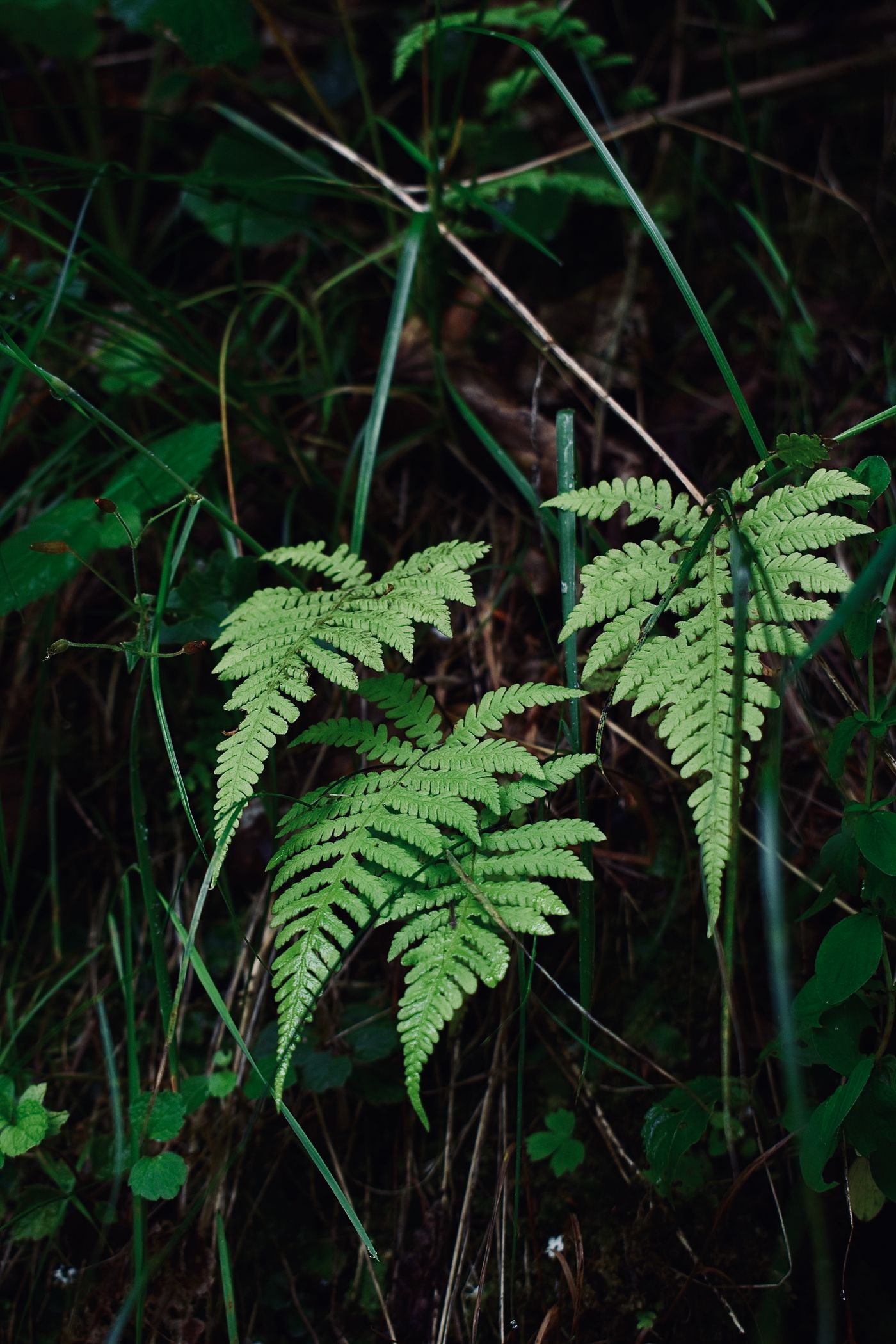
Build the view around two or three noticeable leaf shapes. A few broad leaves make a good contrast with something fine and arching. Some ferns give that finer texture, but the word fern covers plants with very different needs. Check the exact name and moisture requirements rather than assuming all ferns want a bog or that all will cope with dry shade. Many sedges can provide a different line and texture; look for species appropriate to your region and site. Consider locally native plants where they fit, and check local invasive species guidance before choosing a spreading groundcover. Fast coverage is appealing until the same plant turns up in a nearby natural area or takes over the slower plants you wanted to keep.
From a room indoors, a repeated plant in several small groups can link a long stretch of planting. Along a path, one narrow fringe of leaves can provide a continuous thread while the plants behind vary in height. Allow enough room at maturity for both the plant and the person passing it. Scale the foliage to the view: a single small fern can go unnoticed from the far end of the garden but be lovely next to a place to sit. A group of substantial leaves is easier to read from a distance. If you have a patch of late light, place a plant with foliage you like where the sun can strike it for a few minutes. There is no need to put the palest leaves in every dark corner.
Use the winter view to spot gaps before you buy too much summer foliage. Where plants die back for the cold season, a strong line of stone, a carefully placed pot, or a suitable evergreen can keep the bed legible. Sometimes the best winter feature is the one already there: a well shaped trunk, a wall with interesting texture, or an open view between branches. Sketch those elements first. Don't put an evergreen exactly where it will conceal the best part of the tree all year. Choose a plant for the mature space you can give it rather than planning to keep a large shrub permanently small with shears.
Try a small group before planting the whole bed
Pick one representative stretch you can see frequently. Choose a handful of plants with compatible needs, set them out in their pots, and walk past from the usual direction. Keep the smallest plants out of the shadow of a neighbour likely to lean into them. A plant with modest upright growth might make a better foreground companion than a larger one with stems that lie across the path. Set the planting holes around roots and other obstructions. A straight row is rarely worth cutting a substantial tree root. If planting amongst roots leaves most of the proposed bed unavailable, take that as evidence that the plan needs changing.
Water each new root ball as appropriate for the plant and check separately before watering again. A small root ball can dry while the soil a short distance away remains damp, especially when a nursery mix and the garden soil hold water differently. A light mulch can help reduce drying where appropriate. Keep it away from plant crowns and trunks. For a site prone to staying wet, solve the siting problem rather than laying on more mulch. When the plants are established enough to assess, compare growth at the bright and dim ends. If one group is already leaning hard toward the light, don't simply double the order to fill the rest of the bed.
Judge leaf problems in context. Snail or slug damage can show up as irregular holes; browning at a leaf margin can have several causes, including drying or excess sun. Look at which leaves are affected and when the symptoms appeared. If only the foliage next to paving scorches on hot days, try a better protected position for that plant. If nearly all the plants look weak, recheck the basic conditions before applying fertilizer or adding more watering. Take a good photo and the plant name to a local garden educator or nursery if the problem is unclear. Giving a name to the problem is more useful than treating several possible causes at once.
Let the bed change from one end to the other
Imagine a strip that runs from a dry corner under a deep roof to a brighter end beside a path. The corner might need an open surface around the tree roots, or two carefully watered pots chosen for low light. At the intermediate stretch, a small group of plants adapted to the actual soil can form the main body of the bed. At the open end, the same visual form can be echoed with a species better suited to a brighter position. Repetition need not mean using the same plant in every square foot. A shared leaf shape or a similar rhythm of clumps can pull the pieces together while giving each piece a realistic home.
At the end of the first season, look at the bed in ordinary light and ask where your eye goes. Perhaps the fern closest to the steps held attention for months, while a plant you bought for pale flowers was attractive for a fortnight and then vanished behind a neighbour. Consider keeping more of the fern and finding another place for the seasonal plant. If a little patch of open ground makes the foliage around it easier to see, leave it. Shade gives you a chance to make a garden interesting at the scale of a single leaf. Filling every opening is one way to miss that opportunity.