Giving a Crowded Perennial a Fresh Start
Find out which clumps benefit from division, choose a workable day, and replant fewer, stronger pieces.
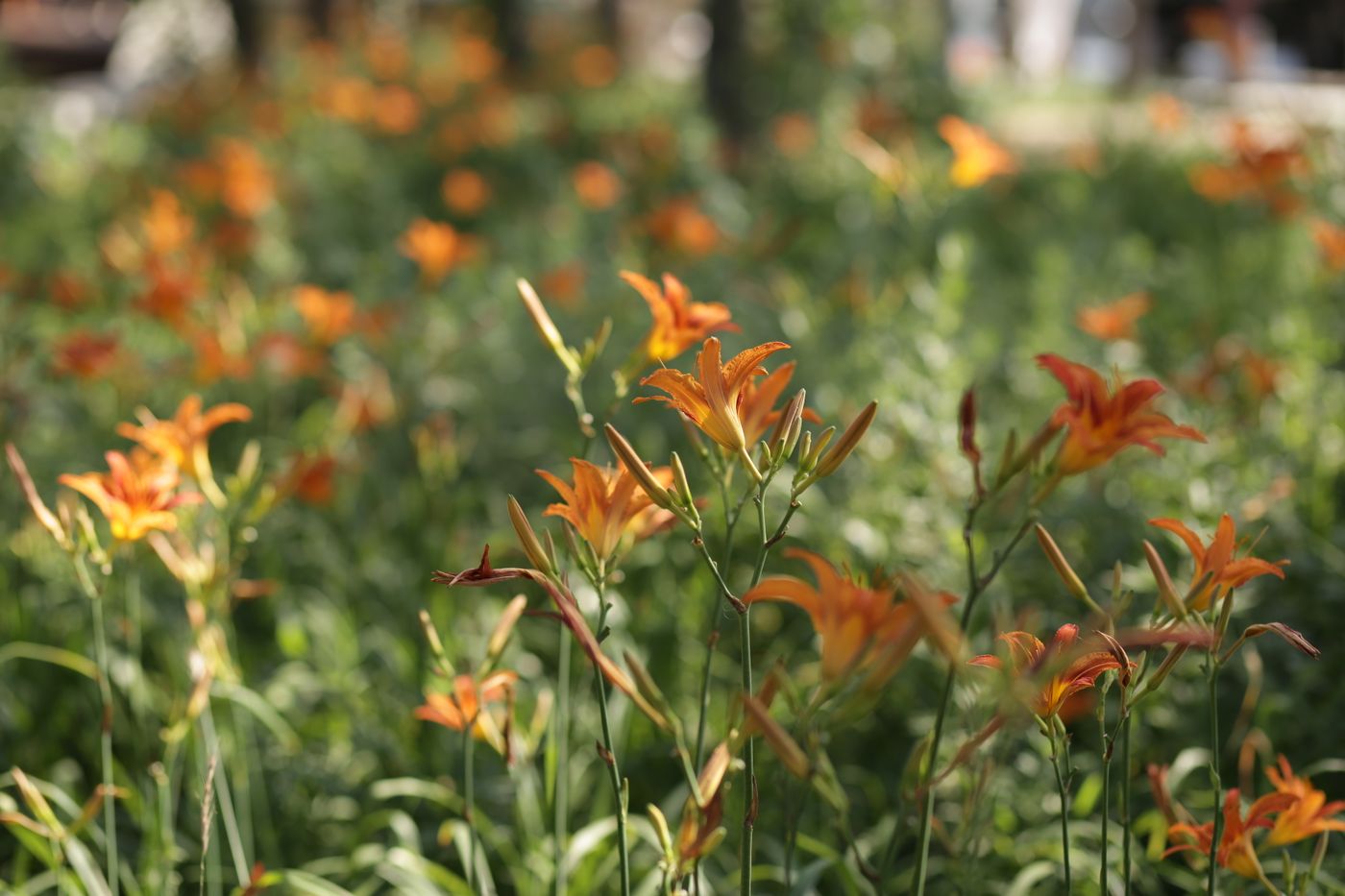
A daylily clump can look full from the path while offering fewer flowers than it once did. From above, its leaves may surround a gap where older growth has thinned. The adjacent plant leans away from it, and weeding between the two has become difficult. Those observations make division worth considering, but they don't mean every big perennial ought to be cut into pieces. Some are better left alone. Others are flowering poorly because they now spend the day in shade, or because a growing neighbour has taken most of the moisture. Lift the plant after working out what you want to change. The operation makes more sense when you can describe where the strong pieces will go and what they can do there that the original clump could not.
Decide whether the clump is the problem
Look at one whole growing season if you can. Note when the plant comes up, how it flowers, whether the centre has gone bare, and how close the stems come to neighbouring plants. Check the light and moisture against what the plant needs. A daylily that blooms well along the outside of a dense clump but has little growth in the middle may respond to renewal. If every daylily across a border lost its flowers after a tree grew over it, dividing them and returning them to the same places won't bring the sun back. A bigger plant may simply be taking up more space than the layout allows. If it is healthy and the space could be adjusted, widening the bed may be preferable to lifting it.
Identify the plant before picking up a spade. Work from the label, nursery record, or a confident identification rather than treating all plants with strappy leaves as the same thing. Read guidance for that species. A fibrous clump, a plant with fleshy roots and distinct fans, and a taprooted perennial do not come apart the same way. Some plants dislike disturbance and can be harder to divide successfully than to replace by another propagation method. A woody shrub is not a clumping herbaceous perennial simply because it has several stems. The University of Minnesota's guide to dividing perennials explains why both the plant and its flowering season affect the decision.
Suspect a problem other than crowding if the decline is abrupt, accompanied by unusual spots or rot, or affecting one side of several unrelated plants. Don't spread pieces from a potentially diseased plant around the garden or pass them to a friend. Seek identification and local advice first. If you find vigorous grass intertwined with the crown, division can give you a chance to separate it, but small hidden pieces may be difficult to remove. Work on the affected clump over a tarp so fragments don't end up in another bed, and handle the waste according to the problem. Check whether a plant can be shared or moved in your area, especially if it is known to spread aggressively.
Use the calendar of the plant and the weather
For daylilies, University of Minnesota Extension recommends early spring or after flowering. Spring work can interrupt that year's display. Waiting until after flowers finish may be a better choice if the weather is suitable and plants have time to establish before the cold. The right dates differ by climate and by plant. Some other late flowering perennials are commonly divided in spring instead of immediately before their bloom, while plants with special root or dormancy habits call for their own schedule. Don't transplant a stressed plant at the height of a dry spell just because the calendar says it is the normal month to divide it.
Look for a cool day with no severe heat forecast and soil that is workable rather than sodden. Give dry soil appropriate water before you begin, so the roots are not pulled from a dusty, hard clod. If the new spot is not ready, do that first. Root pieces left in bright sun and wind while you mark the new bed can dry out. Prepare the place you intend to put each keeper, set out a clean tarp, and assemble suitable tools. Arrange utility locating as required before digging and avoid cutting major tree roots. If the clump is bigger than you can lift safely, get help or separate a manageable outer portion if that is suitable for the plant.
Look for the next plant inside the old one
With a daylily, the fans of leaves and the roots joined to them show where viable divisions can form. Lift the clump with enough room around the perimeter to preserve roots. Set it down gently so you can see the base. Some clumps pull apart where they naturally separate; others need a clean sharp tool to cut through dense material. Use appropriate gloves and stable working conditions, keep fingers away from the blade, and use the tool in line with its instructions. For daylilies, the extension guide describes keeping several fans with their roots attached in each division. For a different species, look for its own healthy growing points and suitable root portions instead of aiming for an arbitrary number of pieces.
Compare the pieces before choosing what to replant. A solid outer piece with strong growing points and intact roots may be worth more than the largest fragment from a tired centre. Discard obviously dead or rotted tissue. If you are unsure whether something is diseased, don't share or distribute it. Keep any healthy divisions shaded with their roots protected from drying while you work. This is a good time to find the labels you laid out in advance. Several divisions will look nearly identical on a tarp, and a marker you plan to write after putting away the tools often never gets written.
There is little advantage to making the maximum number of divisions unless you have a reason and a suitable place for them. A smaller number of substantial divisions can fill their allotted space sooner than many tiny fragments. Lay the best pieces out in their future positions and imagine them grown. If three of them make a continuous band across the border at maturity, don't squeeze in five because there were two extras. An unexpected surplus is an argument for finding another site, safely sharing healthy pieces where allowed, or simply keeping fewer plants. It is not a reason to recreate the original crowding across a wider area.
Put the stronger pieces in a place they can use
Choose the new location before settling on a planting depth. Match the plant to the light, drainage and soil, and follow guidance for its crown. The point where roots meet leaves should not be buried arbitrarily. For a daylily, follow species and regional guidance on setting the crown near the surface. For a different perennial, check its specific requirements. Spread the roots in a hole that allows them to lie naturally, backfill and settle the soil without trampling the crown, and water the planting thoroughly as appropriate. Put the label where you can still read it when the leaves fill out. If you know the eventual width, check the distance to the next plant before the hole is filled.
Pay attention to the ground you disturbed where the original clump stood. If you plan to put one division back, remove competing roots and debris without digging into the roots of unrelated plants. If the old site had an obvious problem, such as deep shade or repeated flooding, find a new site or choose another plant suited to those conditions. If leaving the site open, finish the surface so a new depression doesn't collect water or become a trip hazard beside a route. Cover exposed soil as appropriate and keep mulch away from crowns. Clean the tools, especially before working with unrelated plants, and clean up any pieces that may regrow where you don't want them.
Treat the new divisions like transplants until they are established. Check the root zone for moisture and respond to the soil and weather rather than watering automatically. Flag the site if young growth is easy to tread on. An empty patch around a fresh division is easy to fill in a moment of impatience, but that open ground is the space the plant will eventually need. Use temporary markers instead of planting something permanent in the gap. Look for new growth at the appropriate season and give the plant time to reestablish. Some divisions may spend their first season recovering rather than making a display.
Measure whether the change did what you wanted
Write down which piece went where and what you hoped to improve. Compare a photo from the previous season with the plant in its new position after it has had time to settle. If the original problem was a crowded path, look at how much room remains when the foliage is wet and full. If the problem was weak flowering, wait for the normal bloom period and note the conditions as well as the flower count. A newly divided clump in better light may still take time to establish. If it declines again, review the site rather than planning to divide it more often.
An established perennial is worth keeping for reasons beyond its ability to supply more plants. It may fit a particular view, bloom in the gap between two other plants, or come back reliably in an awkward part of the bed. Division works when it preserves those qualities and makes room for healthy growth. Sometimes the best result is one new clump and one open space, with the other plants given their share of the border back. That's an easier garden to look after than a dozen little versions of the same overcrowded bed.